Should Healthy People Use Continuous Glucose Monitors?
CGMs are no longer just for people with diabetes. Athletes, health enthusiasts, and individuals with prediabetes are turning to these devices to see how food, exercise, sleep, and stress affect their blood sugar — but do they actually help?
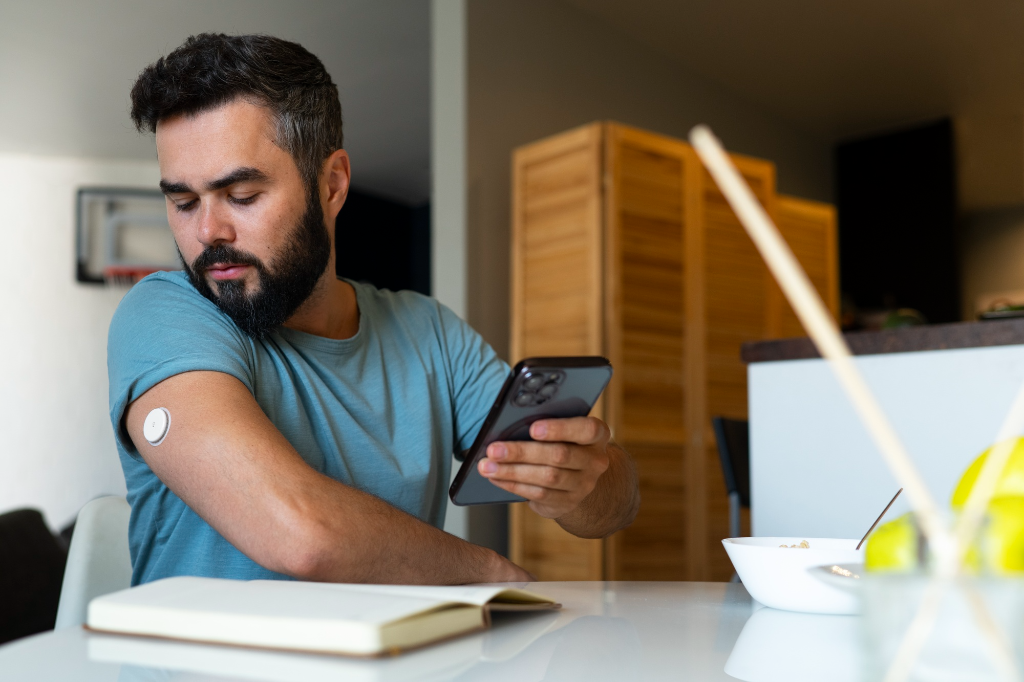
Continuous glucose monitors (CGMs) are increasingly being used by people without diabetes who want to better understand their metabolic health. Athletes, health enthusiasts, and individuals with prediabetes are turning to these devices to see how food, exercise, sleep, and stress affect their blood sugar.
But do continuous glucose monitors actually provide meaningful benefits for people who are otherwise healthy?
What Is a Continuous Glucose Monitor?
A continuous glucose monitor is a small sensor typically worn on the back of the arm that measures glucose (blood sugar) levels in the fluid beneath the skin. Unlike traditional finger-stick testing, CGMs provide continuous real-time data showing how glucose levels change in response to food, exercise, sleep, and stress.
Originally developed for diabetes management, CGMs are now increasingly used by people who want to better understand how their daily habits affect their metabolism.
"CGMs can be powerful biofeedback tools that show how our diet and environment impact our health. They provide insights into how food, sleep, recovery, exercise, and stress influence our blood sugar, allowing us to make changes in real time."
Who May Benefit Most?
CGMs may be most useful for people who are:
- •Monitoring prediabetes or early metabolic changes
- •Exploring personalized nutrition patterns
- •Optimizing fueling strategies for athletic performance
For individuals who are already metabolically healthy, the insights may be interesting but may provide limited long-term benefit. Still, many users appreciate the awareness the technology provides.
"CGMs allow us to see how our diet impacts us. We can make a small change and immediately see how it affects our blood sugar and how we feel."
What CGMs Can Reveal
For individuals without diabetes, CGMs can highlight patterns that might otherwise go unnoticed. For example, they may show:
- •How different meals affect glucose levels
- •Individual variability in responses to the same foods
- •How meal timing or portion size influences glucose patterns
Research consistently shows that glucose responses to the same food can vary widely between individuals. Seeing these differences in real time can encourage more intentional nutrition choices.

The Power of Real-Time Feedback
One of the most meaningful benefits of CGMs may be the immediate feedback they provide. When people can see how their glucose levels change after a meal or snack, they often become more mindful of their eating habits. Visual feedback can be a powerful motivator for behavior change.
Dr. Richardson noticed this effect personally while wearing a CGM.
"One of the things I did not expect when wearing the continuous glucose monitor was how quickly I changed my own diet. I was eating regular foods and noticed my blood sugar looked more like a roller coaster instead of a steady line. So I started changing my behaviors, both consciously and subconsciously, to avoid those spikes."
For many users, the value of CGMs comes less from the numbers themselves and more from the habits those numbers encourage.
Why Glucose Can Rise During Intense Exercise
Some CGM users notice a temporary rise in glucose during high intensity workouts. During steady aerobic exercise, glucose levels often remain stable or decline slightly. However, activities such as sprinting, HIIT training, sparring, or heavy strength training can cause short-term increases.
This occurs because intense exercise triggers the release of hormones such as adrenaline and cortisol, prompting the liver to release stored glucose for quick energy. In metabolically healthy individuals, glucose levels typically return to baseline within about 30 to 60 minutes.
It is also important to note that CGMs can become less reliable during heavy exercise. Movement, sweat, and sensor compression may cause readings that slightly overestimate or underestimate true glucose levels.

Stress, Sleep, and Glucose
Daily habits can also influence glucose patterns. A single night of poor sleep usually has minimal impact on glucose levels in healthy individuals. However, chronic sleep disruption can affect metabolic health over time.
Stress can also cause temporary increases in glucose due to the body's hormonal stress response. These changes tend to be more noticeable in individuals with insulin resistance or prediabetes.
Common Questions About CGMs for Non-Diabetics
Do healthy people benefit from wearing a CGM?
Some people find CGMs helpful as a biofeedback tool to better understand how their body responds to different foods, exercise, sleep, and stress. However, for individuals with normal metabolism, the long-term medical benefit may be limited.
What is a normal glucose spike after eating?
In people without diabetes, glucose may rise after meals and usually returns to baseline within one to two hours. Short spikes are common and not necessarily harmful.
Why does glucose rise during intense exercise?
High intensity exercise can temporarily raise glucose levels because hormones like adrenaline signal the liver to release stored glucose for energy. Levels usually return to normal within about 30 to 60 minutes.
Are CGMs accurate in people without diabetes?
CGMs measure glucose in the fluid beneath the skin rather than directly in the bloodstream. They are generally accurate for trends, but readings can sometimes lag or fluctuate with exercise, hydration, or sensor pressure.
The Bottom Line
Continuous glucose monitors can provide insight into how the body responds to food, exercise, sleep, and stress. For some people, that visibility can encourage healthier habits and greater awareness of metabolic health.
However, for individuals without diabetes, CGMs are best viewed as informational tools rather than medical interventions. The core foundations of metabolic health remain consistent:
- •Balanced nutrition
- •Regular physical activity
- •Quality sleep
- •Sustainable daily habits
Technology can provide helpful insights, but long-term health still depends on these fundamentals.
Bespoke Primary Care in Wellesley, MA
Bespoke Primary Care is a concierge primary care practice in Wellesley, Massachusetts serving patients across Wellesley, Weston, Needham, and the surrounding Greater Boston area. The practice focuses on personalized, preventive medicine and long-term health optimization.
Some patients choose to use continuous glucose monitors for short periods as part of a metabolic health assessment. This can help them better understand how their lifestyle and nutrition affect their blood sugar patterns.
If you have questions about metabolic health, preventive care, or personalized wellness strategies, we are here to help. To schedule an appointment, call 617-531-9503 or email contact@bespokeprimarycare.com.
Questions About Your Metabolic Health?
Schedule a consultation to discuss CGMs, preventive care, and personalized health strategies.
Request Information